
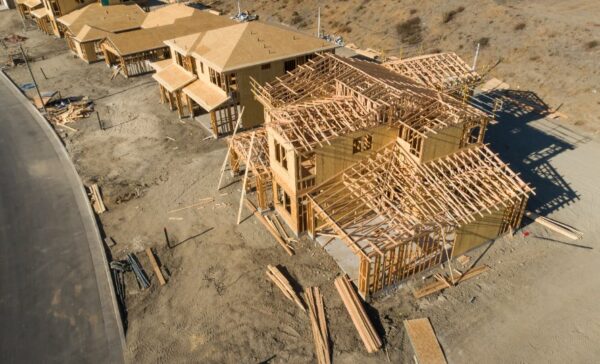
Bison Financial Group has closed over $100 million of loans in the SFR, BFR, and BTR space since 1994.
David Repka, principal of Bison Financial Group, was asked to discuss his thoughts on 2026 with regards to the SFR (single-family-rental), BFR (build-for-rent), and BTR (build-to-rent) lending arena.
The interview is part of a series of interviews that David has provided for The Crittenden Report over the years. This interview will be in The Crittenden Report in Jan/Feb 2026.
Q: What are your predictions for single-family rental (SFR), build-for-rent (BFR), and build-to-rent (BTR) lending in 2026?
A: Resident demand for new, low-maintenance single-story and townhouse-style properties will remain strong. Residents love the feeling of a detached single-family home with a yard for kids and dogs, and a place to park bicycles and kayaks.
Q: What will be the biggest trends/changes in SFR/BFR/BTR lending going forward versus years past?
A: While demand will remain strong, getting projects to “pencil” will be the biggest problem developers face.
Q: How will underwriting change for these loans next year?
A: Lenders are seeking projects that can generate a Yield on Cost (YOC) of 7+%. Developers are facing rising land costs, soft costs, and construction costs and lenders that are underwriting based on “non-trended rents”. This means developers face the double whammy of rising CapEx costs on a project that won’t deliver for 18-30 months, and lenders are assuming rents won’t rise a penny from what can currently be achieved in the market.
Q: What type of SFR/BFR/BTR properties and projects will lenders target? (class, location, size, number of units)? What type will be the toughest to finance?
A: Top 100 MSAs in a blend of primary, secondary, and tertiary markets. The sweet spot is workforce housing for “neighborhood heroes” like nurses, first responders, teachers, government workers, etc., with dependable monthly income. Small markets, rural markets, and markets with an over-concentration on any one industry (military base, etc.) will find it hard to attract financing.
Q: What will be the typical leverage on these deals?
A: Leverage on new construction projects will top out at 75% for the best projects in supply-starved markets with the best sponsors. This compares to up to 85% of cost just a few short years ago. Construction lenders will size to an exit at not more than 65% loan-to-value based on non-recourse Agency or CMBS underwriting.
Q: What will be the typical interest rates?
A: Non-bank lenders will offer interest rates on non-recourse construction loans starting at SOFR plus 450 to 750bp. Lenders will size the loan based on the takeout at completion, stabilization and refinance. Stabilized properties can be financed at fixed rates in the mid 5s to mid 6s depending on LTV, debt coverage and dollar amount. Risk-based pricing applies: best rates for larger pools with lower leverage and strong debt coverage.
Q: What are the hottest markets for SFR/BFR? What markets will lenders shy away from? Why?
A: Hottest markets will be in the “smile states” specifically Texas, Florida, Georgia, Tennessee, Arizona, and the Carolinas. Lenders will place their chips in markets with demonstrated job creation and net in-migration. High Tax/High Regulation states will be avoided.
Q: What will lenders look for from sponsors when underwriting? (certain net worth, liquidity, number of other properties, etc.)
A: Lenders are biased to lending to experienced Sponsors with multiple “round trips” in the niche. Can the prospective borrower show experience buying, building, renting, and selling for a profit? Strong sponsors with solid post-closing liquidity of 10-20% of the loan amount will receive loans.
Research articles:
- https://www.cnbc.com/2024/03/19/why-home-prices-have-risen-faster-than-inflation-since-the-1960s.html#:~:text=Home%20prices%20rose%202.4%20times,What%20that%20means%20for%20homebuyers&text=If%20home%20prices%20increased%20at,a%20real%20estate%20data%20company.
- https://www.marketwatch.com/financial-guides/personal-loans/household-american-debt/
- https://tradingeconomics.com/united-states/consumer-confidence#:~:text=Consumer%20Confidence%20in%20the%20United,points%20in%20June%20of%202022.
Author: David Repka

About the Author:
David Repka is the Co-Founder of Bison Financial Group in St. Petersburg, FL.
Bison arranges debt and equity financing for commercial real estate investors and developers.
Bison has relationships with investors across the risk spectrum funding acquisition, renovation, refinancing, and new construction.
Click to learn more about Bison's impressive track record:
Bison Financial Group